
A note from the team: Congratulations to Heather Rodehaver, our Business Development lead, on winning the 2026 Bill Bradford, Jr. Service Award from the Spiral Duct Manufacturers Association (SPIDA), presented at SPIDA’s Annual Meeting in Boston. It is a well-earned recognition of the experience, judgment, and care she brings to every contractor relationship at TCG. We could not be prouder to have her representing the work we do. Read the full story.
Never Reuse Old, Field-Fabricated Supports on a New Roof. TCG Sources MIRO Systems to Protect Your Investment
by Heather Rodehaver, Business Development at TCG
The Cincinnatus Group sources industrial and commercial ductwork for projects across the country, and we have over 21 years of experience behind us. We’ve installed a lot of duct in both new construction and retrofit projects, and we know what to look for to protect our client’s investment.
One consideration, often overlooked, is roof support for ducting and equipment when a retrofit replaces the roof on a building.
Re-Roofing Happens More Often Than You Think
Commercial roofs do not last forever. A typical single-ply membrane is built to last 20 to 30 years, and plenty get replaced sooner because of leaks, storm damage, or a new owner with a fresh capital budget. Across the country, re-roofing is a steady, year-round line of work.
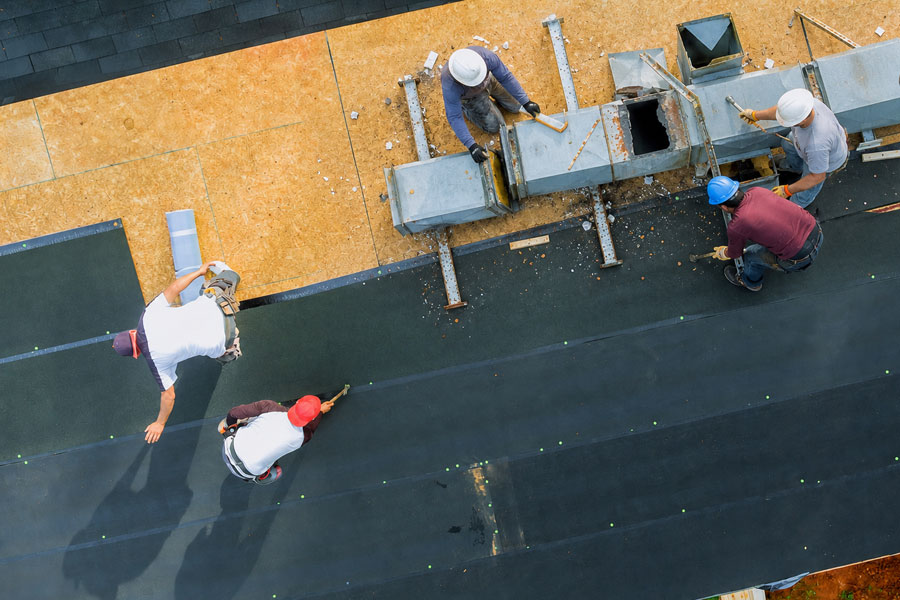
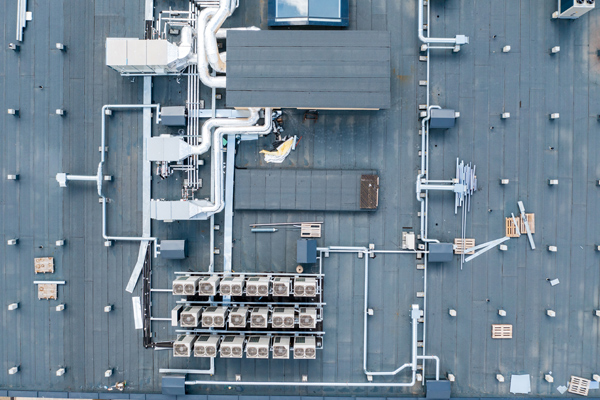
Here is the part that gets overlooked. Almost every commercial re-roof involves rooftop HVAC equipment that has to be dealt with. Units, duct runs, conduit, and piping all sit on the old roof. None of it can stay put while a new membrane goes down. So the equipment comes up, the roof gets replaced, and the equipment goes back. The question that rarely gets asked early enough is simple: what is it going back down onto?
The Moment the Risk Shows Up
Walk a typical re-roof and the sequence is predictable. The crew lifts the rooftop units and duct runs. The old supports come off. The roofer installs the new membrane. Then the mechanical crew sets everything back in place. The often overlooked problem lives in that final step, because there are usually two tempting shortcuts, and both create problems.
- Reusing the old supports. The supports that came off were often field-fabricated or penetrating to begin with. Wood blocks rot. Steel rusts. Penetrating feet leave a track record of patched holes. Setting tired, non-engineered supports onto a brand-new membrane carries the old problems straight into the new roof.
- Improvising new ones in the field. When supports are not planned into the re-roof scope, the crew builds something on the spot from whatever is on the truck. That is how a 30-year roof ends up carrying rooftop loads on leftover strut.
Either way, the contractor who set the equipment owns the outcome. When the new membrane gets punctured, abraded, or voided, the callback lands on them, often months after the job closes.
A Fresh Membrane Deserves MIRO Support
A re-roof is the cleanest opportunity a building will get for the next two or three decades to set its rooftop equipment up the right way.
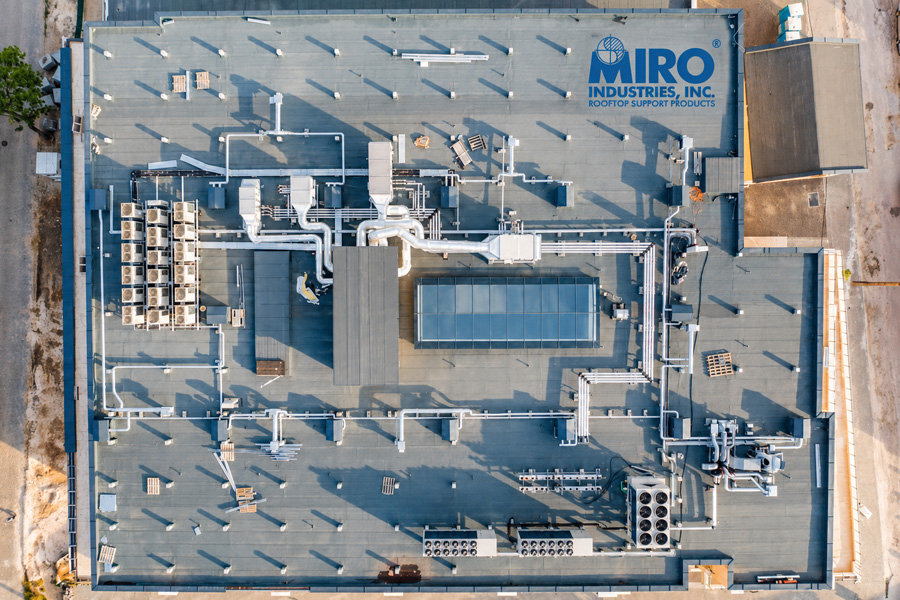
Through TCG’s distributorship with MIRO Industries, contractors get direct access to a line of non-penetrating supports built for exactly this work. MIRO has engineered rooftop support systems since 1982 and is the longest-standing name in the category.
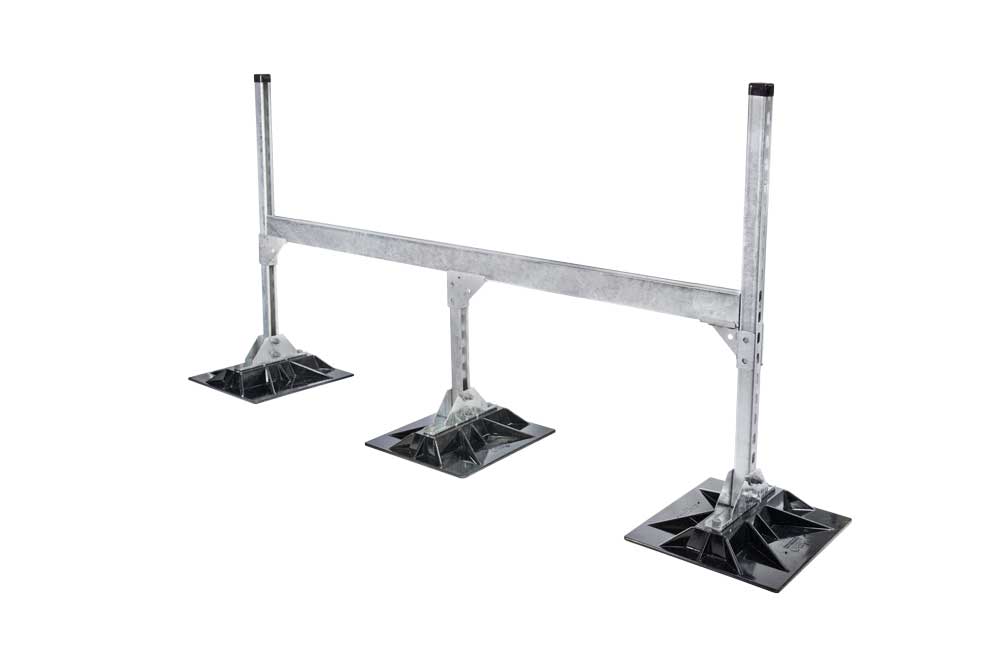
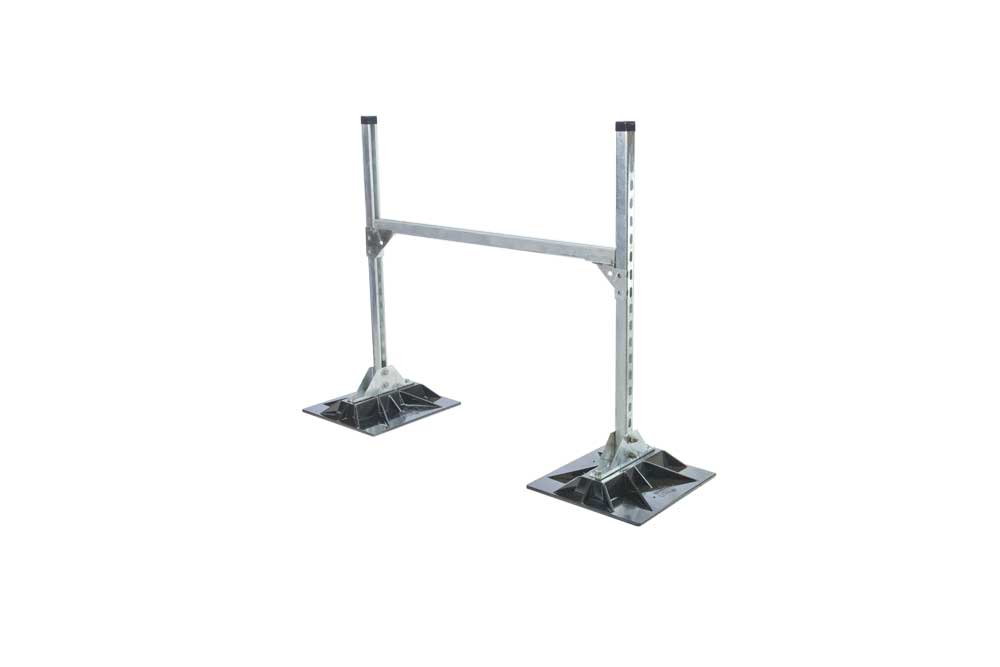
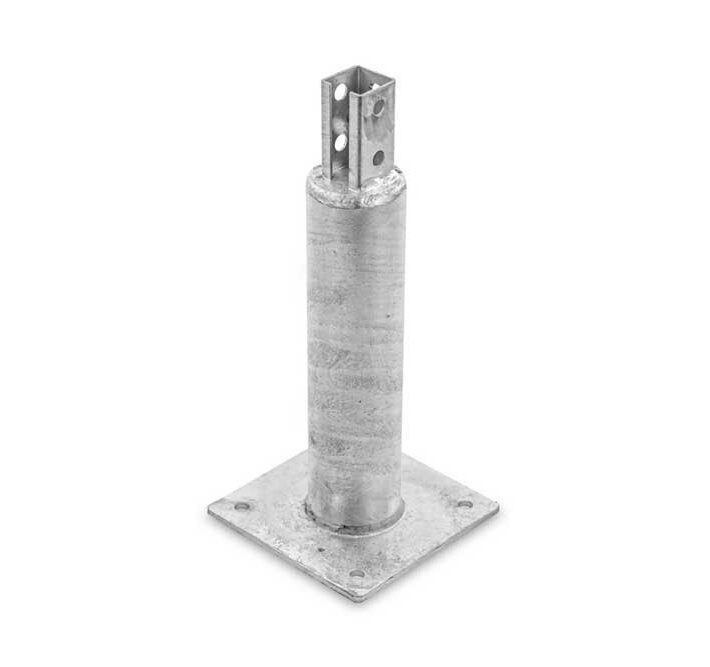
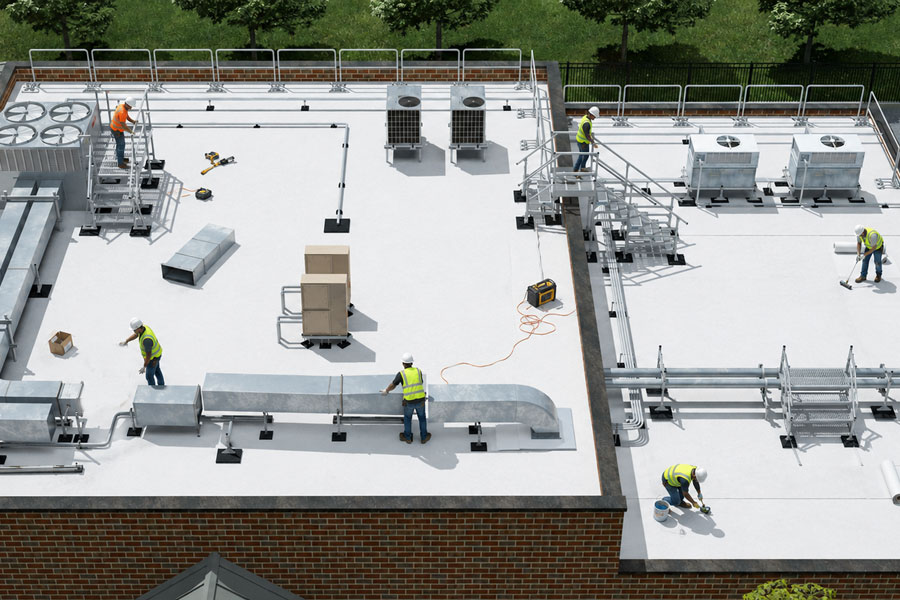
A non-penetrating support sits on top of the membrane and spreads the load across a wide base. It does not put a single new hole through the roof the owner just paid for. That one design choice removes a whole category of risk: no new leak paths, no conflict with the roofer’s flashing details, and no argument later about who damaged the membrane. The support does its job by staying on top of the roof, not by anchoring through it.
Actually, this may matter more on a retrofit than on new construction. On new work, the membrane and the supports often get coordinated from the start. On a re-roof, the membrane is already a finished, warrantied surface by the time the equipment goes back. Anything that penetrates it after the fact is a problem waiting to surface.
The New Roof Warranty Is on the Line
A new commercial membrane comes with a manufacturer warranty, and that warranty is one of the main reasons the owner spent the money. Most roofing warranties exclude damage caused by non-engineered or penetrating attachments added after installation. In plain terms, the wrong support can void the warranty on a roof that is only weeks old.
Non-penetrating supports keep that warranty intact. They let the mechanical scope and the roofing scope coexist without either trade putting the other’s work at risk. For an owner or developer protecting a major capital investment, that is not a small detail. It is the difference between a roof that performs for its full rated life and one that starts generating disputes in year one.
MIRO Supports, Built for the Retrofit
When a re-roof reaches the point of resetting equipment, the support system needs to be engineered, non-penetrating, and matched to the actual loads on the roof.
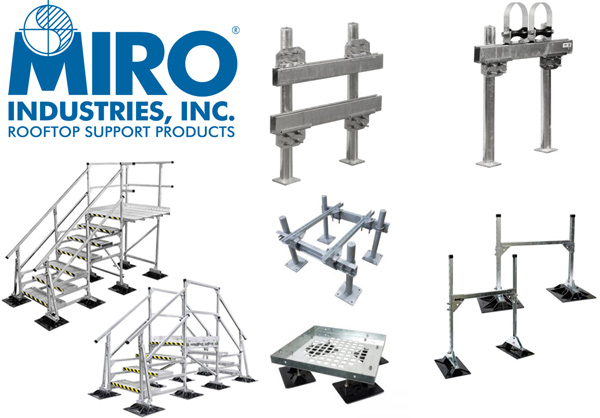
The MIRO line covers nearly every situation a re-roof will surface:
- Pillow block, roller, and strut supports for pipe and conduit
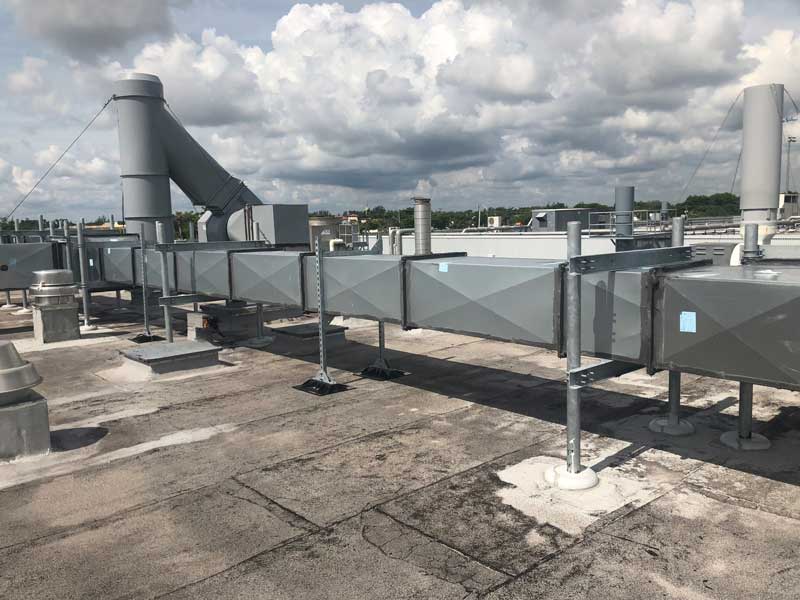
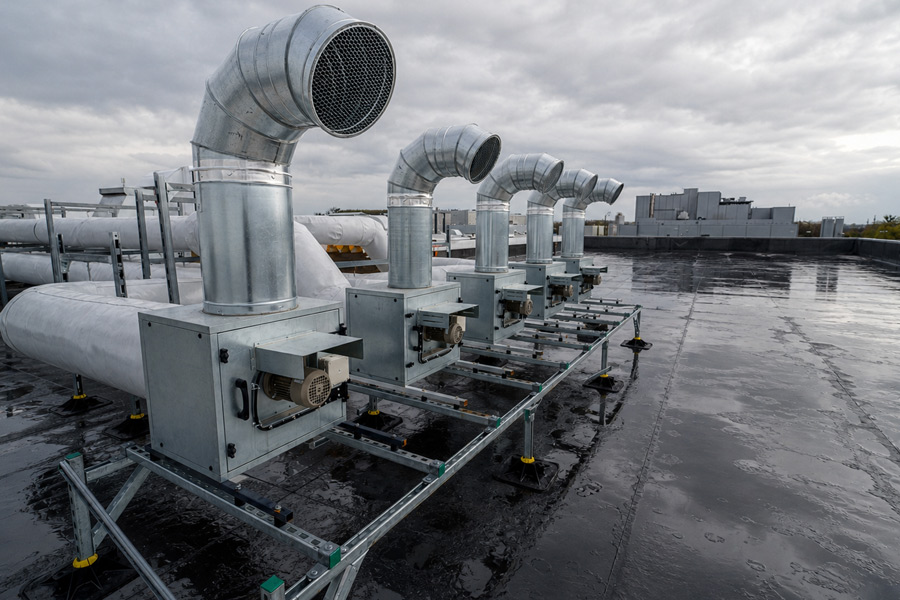
- Non-penetrating duct supports in single-tier, multi-tier, and enclosed configurations
- Light-duty and heavy-duty mechanical unit supports for rooftop equipment
- Stairs, ramps, crossovers, and OSHA-compliant service access platforms
- Wind and seismic compliant variants, with in-house engineering and P.E.-stamped designs when a project calls for them
- Data center rooftop solutions for high-density loads
Every MIRO product is made in the U.S.A. and backed by a 20-year warranty. It’s a service life built to match the expected performance of the new membrane, so the supports and the roof are designed to reach the end of the road together. With steel and aluminum tariffs at 50%, domestic manufacturing is also a real advantage on pricing and lead time. For deeper background, see our earlier article on the importance of rooftop supports in HVAC, and our guide to choosing the right rooftop duct supports.
The Coordination Problem a Re-Roof Creates
A re-roof is a crowded job. The roofing contractor owns the membrane. The mechanical contractor owns the equipment. The owner’s facilities team wants the building running the whole time. Sequencing matters, because the support package has to be on site and ready the moment the new membrane is down and the equipment is cleared to go back.
When the support sourcing is left to the last minute, that is where re-roofs slip. Someone realizes the old supports are unusable, the new ones were never ordered, and now the equipment is sitting on a finished roof waiting on a delivery. That delay holds up the roofer, the mechanical crew, and the building.
This is where TCG’s work shines. We coordinate the rooftop support package, along with any duct that needs to be replaced while the roof is open, so the materials are specified correctly and staged to the schedule. At The Cincinnatus Group, we bring is 21+ years of sourcing experience, approved manufacturer relationships, and the discipline to ask the right questions before the roof comes off, not after. The contractor briefs one team instead of chasing separate vendors mid-project.
What It Looks Like Done Right
Consider a common scenario. A 90,000-square-foot distribution center needs a new membrane. The roof carries several large rooftop units, long exhaust duct runs, and bundled conduit. The original supports were a mix of penetrating feet and field-built wood sleepers, and a few of those old penetrations are part of the reason the roof is being replaced.
Handled well, the support package is planned before demolition begins. Non-penetrating MIRO supports are specified for the duct runs and the units, sized to the real loads, with wind-rated variants where the building’s location calls for them. The materials arrive staged to the re-roof schedule. When the new membrane is down, the equipment goes back onto engineered supports that protect the warranty and spread the load. The roofer’s work stays intact, the mechanical crew stays on schedule, and the owner gets a roof and a support system built to last the same two or three decades.
Plan the Supports Before the Roof Comes Off
A re-roof is a rare reset. The smart move is to treat rooftop support as part of the re-roof scope from the start, not as a field decision made under schedule pressure. Specify engineered, non-penetrating supports that protect the new membrane and its warranty, and get the sourcing planned in early.
That planning is exactly what The Cincinnatus Group is built to handle. We bring the experience, a SMACNA Bronze Associate Membership, and a MIRO distributorship to projects where getting the rooftop right protects everything underneath it. We are “Called to Solve, Where Others Struggle.”
Have a re-roof or retrofit coming up? Contact The Cincinnatus Group today at 878-295-8009 or visit www.tcgduct.com/contact to start the conversation.
Let’s start planning your next success
To learn more about any of the services provided by The Cincinnatus Group, including Contracted Estimating and Take Offs, CAD/BIM/Coordination Drawings, and Project Management Assistance, please call us at 878-295-8009, or visit our Contact Us page today.