
The Sectors With the Healthiest Forward Demand:
Logistics, Healthcare, Education, and Data Centers — Are the Ones Built for Rooftop Units. That Favors Contractors Who Already Have Rooftop Ducting and Supports Figured Out.
by Heather Rodehaver, Business Development at TCG
Contractors in the HVAC industry are always asking “Is the market up or down?” When it comes to deciding where to aim next year’s capacity, that question is too wide. Few markets are uniformly up or down. They move. Capital leaves one sector and lands in another, and the contractors who notice the migration are the ones bidding the work while it is still being awarded.
Recent headlines have noted data center construction facing regulatory, power, and local hurdles in certain markets. While some projects face delays, overall demand remains strong and activity is shifting geographies. Following where the centers are being built (and the supporting infrastructure they attract) will matter more than assuming demand has disappeared.
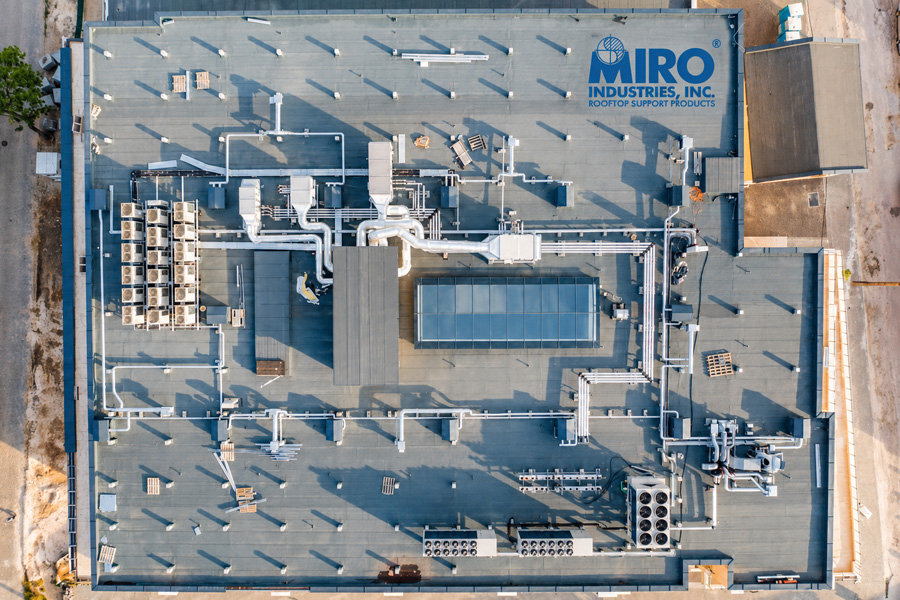
Here is what stands out. These sectors I mentioned don’t look like they have much in common on paper. A regional hospital and a 400,000-square-foot fulfillment center are not comparable buildings. But they share one structural trait that matters to anyone in the sheet metal trade: they are built low and wide, and they are conditioned from the roof.
The Shared Trait: Wide Floor Plates and Packaged Rooftop Units
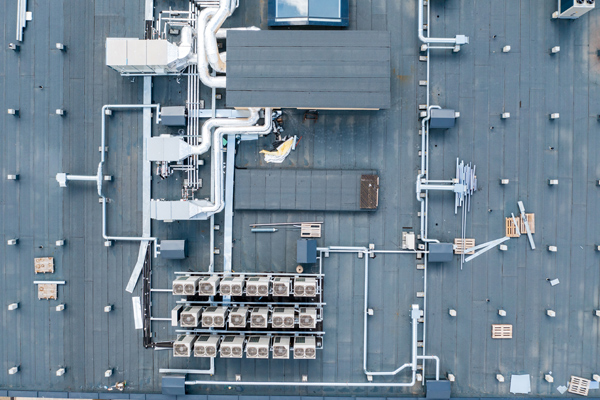
When a building spreads out instead of up, the mechanical design is predictable. There is no economical way to run a central plant and vertical risers through a single-story box covering several acres. So the load gets distributed across the roof and handled by packaged rooftop units (RTUs) — self-contained heating, cooling, and ventilation equipment that sits on the roof and serves the zone directly beneath it.
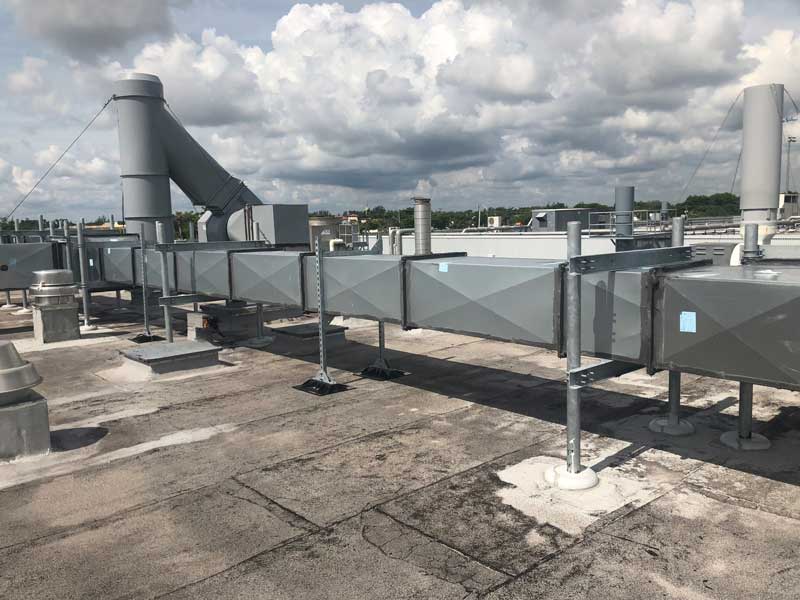
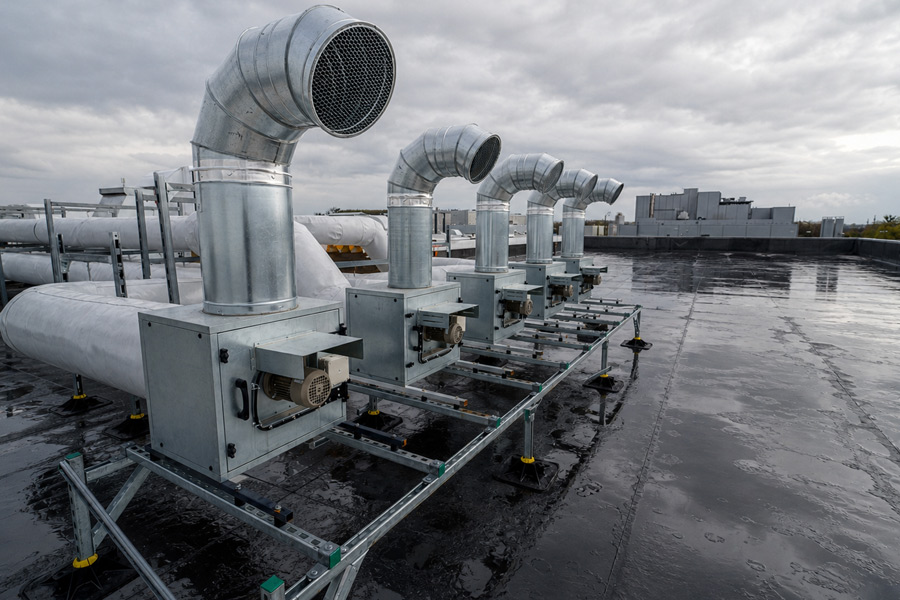
In designs like that, every RTU needs duct. Duct that runs across a roof needs engineered support. Equipment that sits on a membrane needs to sit on something that will not damage the membrane. What may be a specialty item on a high-rise becomes standard, repeating scope on a warehouse or a school.
What does the market data say about this? Multiple industry analyses put the U.S. commercial rooftop unit market on a growth track of roughly 4.9% compound annual growth through the early 2030s, driven by three forces: new construction in exactly these low-and-wide sectors, tightening federal energy-efficiency standards, and the replacement cycle on aging equipment installed decades ago. New work and replacement work are pulling in the same direction, which has not always been the case historically.
Logistics and Warehousing: The Volume Play
Distribution and fulfillment construction cooled from its pandemic-era peak, and the market spent a stretch absorbing the space that got built. Absorption of pandemic-era space has progressed significantly, with forecasts pointing to a gradual upturn in construction activity from 2026 onward. E-commerce, last-mile networks, and fulfillment strategies are expected to sustain demand for space near population centers.
For a sheet metal contractor, this is the highest-repetition rooftop work in the market. Big roofs, long duct runs, many units, and a design language that repeats from building to building. The margin on this work lives in execution: accurate material counts, on-time delivery, and a support package that does not become a field improvisation on install day.
Healthcare: Resilient, and Never Really Finished
Healthcare construction is among the more resilient sectors in commercial building. People need care in a strong economy and a weak one, and the facilities delivering that care are under constant pressure to expand, modernize, and stay compliant.
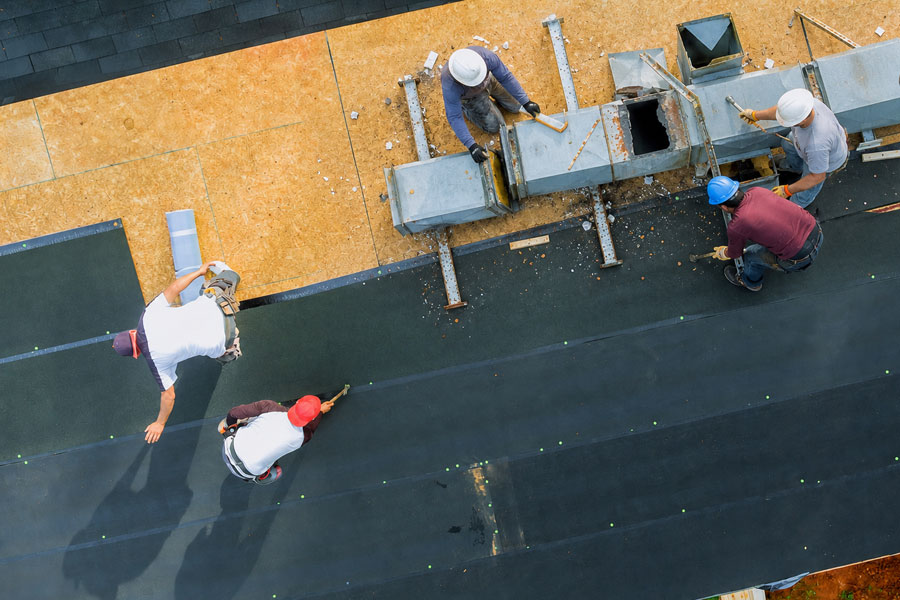
Mechanically, healthcare is demanding in ways that favor experienced sourcing. Things like infection control affect air change requirements. Redundant systems are often mandatory. And we see a meaningful share of the work is becoming renovation inside an operating facility — which means the rooftop scope has to be installed without interrupting the building underneath it. Outpatient centers, clinics, and medical office buildings in particular tend to be low-rise and rooftop-conditioned, which puts them squarely in this category.
Education: Institutional Money, Steady Work
Schools are the definition of low and wide. Single- and two-story buildings, large footprints, and rooftop equipment nearly across the board. Education spending is driven by enrollment, bond issues, and deferred maintenance rather than by the interest-rate cycle, which makes it a useful counterweight when private commercial work slows.
Two streams of work are running here at once: new construction and expansion in growing districts, and energy retrofits on buildings whose mechanical systems are two or three decades past their design intent. That second stream is substantial, and it is rooftop work almost by definition.
Retail, Mixed-Use, and Adaptive Reuse: Targeted, but Real
Retail is not the broad growth story it once was, but it is far from quiet. The activity has concentrated into specific niches: grocery-anchored centers, quick-service restaurants, mixed-use infill, and the conversion of obsolete retail box stores into other uses.
And behind all of it sits a large installed base of rooftop equipment reaching the end of its service life. Replacement work in retail is recurring, predictable, and almost entirely a rooftop scope. It is not glamorous, but it comes back around every year.
Data Centers: The Accelerant
Data centers deserve their own article, and we may take a look at that in a future article. For now, note what they are doing to everything around them.
The obvious part is the rooftop load itself. High-density computing pushes mechanical demand well past what a conventional commercial building asks of its roof, and that means heavier equipment, larger duct, and support systems engineered for loads that would be unusual anywhere else. MIRO’s data center rooftop solutions exist specifically for that profile.
The less obvious part is the cluster effect. Data centers do not arrive alone. They pull power infrastructure, logistics, warehousing, and support facilities into the same geography, and much of that ancillary construction is exactly the low-and-wide, rooftop-conditioned building type described above. Where the data centers go, ordinary rooftop HVAC work follows.
Recently, we’ve all heard about data center construction slowing, but so far those are regulatory concerns for specific projects. The centers will get built somewhere, so following the activity is going to be more important than thinking the market demand is disappearing.
What This Work Demands of the Roof
Take those verticals together and a consistent set of rooftop requirements emerges. This is where the opportunity turns into scope.
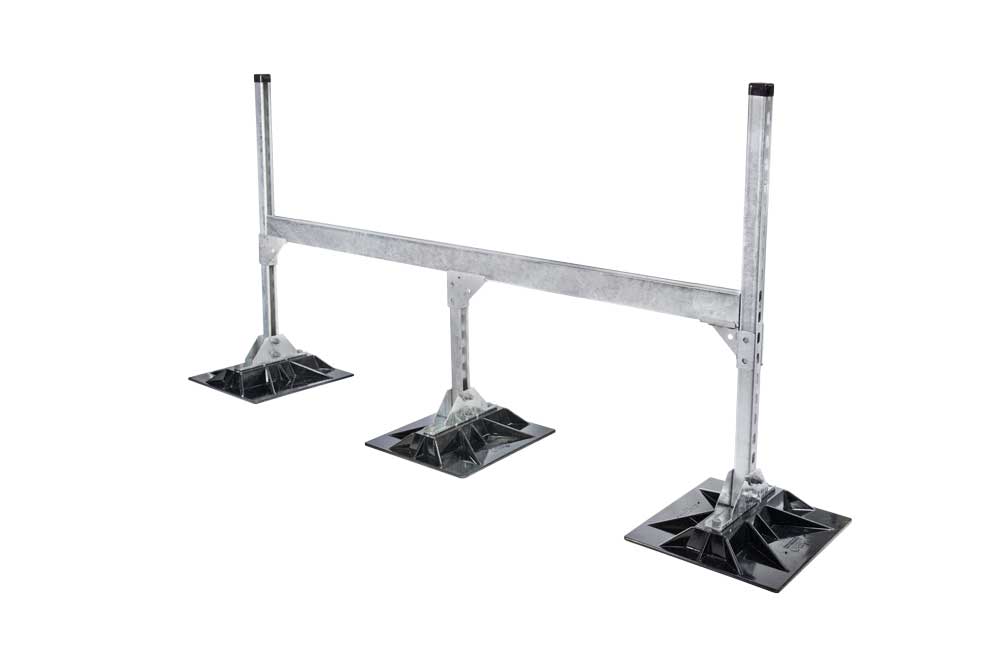
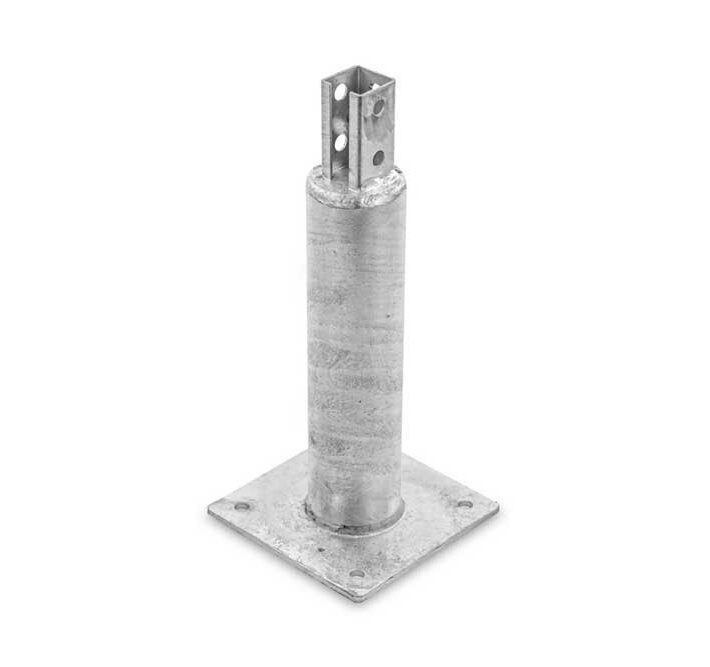
- Non-penetrating, code-compliant support. The roof is a warrantied assembly and a capital asset. Support systems that sit on the membrane and spread load across a wide base keep the roofing scope and the mechanical scope from putting each other at risk.
- Real load coordination. Roofs are carrying more than they used to. Solar arrays, heavier electrified and heat-pump equipment, and higher-capacity units all add weight that has to be reconciled with the structure below. Support selection has to reflect actual loads, not assumed ones.
- Wind and seismic ratings that match the geography. Much of the heaviest building activity is in Sunbelt markets — Texas especially — where wind provisions are not a formality. Wind- and seismic-compliant variants with P.E.-stamped designs are available when a project calls for them.
- Minimal-disruption installation. Healthcare renovations, occupied schools, and running distribution centers all have to keep operating while the work happens. Materials that arrive complete and correct are worth more here than materials that arrive cheap.
- Service access that keeps people safe. More rooftop equipment means more technicians on the roof. Stairs, ramps, crossovers, and OSHA-compliant service platforms are part of the scope, not an afterthought.
MIRO Supports: Engineered for the Work That Is Growing
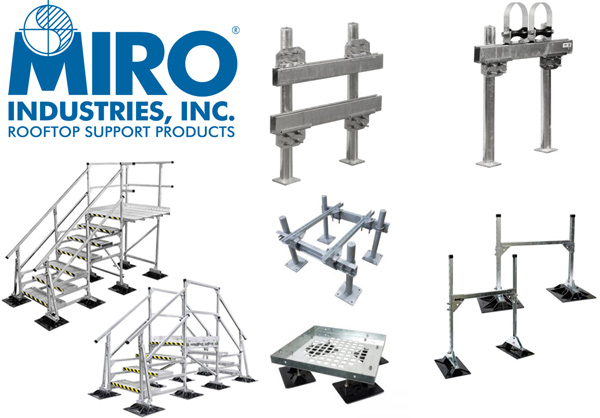
Through TCG’s distributorship with MIRO Industries, contractors get direct access to a line built for precisely this profile of work. MIRO has engineered rooftop support systems since 1982 and is the longest-standing name in the category. The line covers nearly everything these sectors put on a roof:
- Pillow block, roller, and strut supports for pipe and conduit
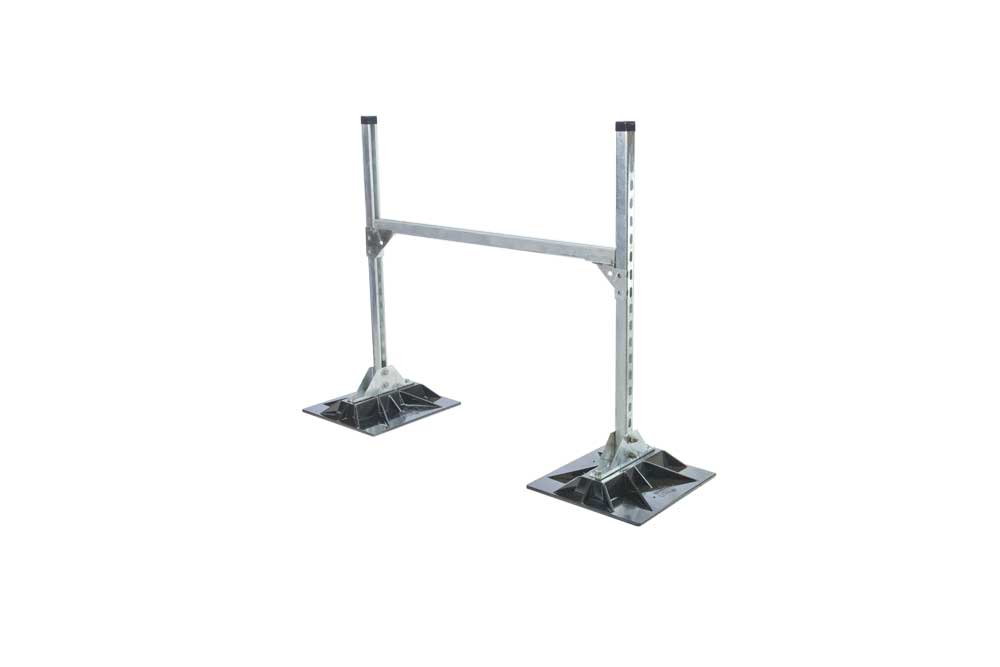
- Non-penetrating duct supports in single-tier, multi-tier, and enclosed configurations
- Light-duty and heavy-duty mechanical unit supports for rooftop equipment
- Stairs, ramps, crossovers, and OSHA-compliant service access platforms
- Wind and seismic compliant variants, with in-house engineering and P.E.-stamped designs when a project requires them
- Data center rooftop solutions for high-density loads
Every MIRO product is made in the U.S.A. and backed by a 20-year warranty — a service life built to match the membrane it sits on. With ongoing trade policies and tariffs favoring domestic production, U.S. manufacturing remains a real advantage on both price stability and lead time. For deeper background, see our earlier articles on the importance of rooftop supports in HVAC and choosing the right rooftop duct supports.
Where TCG Fits
Chasing growth verticals is a capacity decision before it is a sales decision. A contractor who wins more rooftop work has to source more rooftop material, and the duct and the supports are two different conversations with two different sets of manufacturers, lead times, and quotes.
What TCG offers is one experienced sourcing partner carrying both conversations. We coordinate the ductwork and the MIRO support package together. The contractor briefs one team instead of managing separate vendor relationships mid-project and hoping the pieces arrive in the right order.
Behind that coordination sits 21+ years of sourcing experience, a SMACNA Bronze Associate Membership, and approved manufacturer relationships that took two decades to build. No promises the supply chain cannot keep. Just experienced people doing the coordination work contractors would otherwise carry themselves.
Aim at the Work That Is Actually Being Built
The growth in commercial construction is not evenly distributed. We see increasing concentration in buildings that are wide, low, and conditioned from the roof. For sheet metal contractors, mechanical contractors, and duct fabricators, that is a favorable trend — provided the rooftop scope is a strength rather than a scramble.
The contractors who will do well in these verticals are the ones treating rooftop ducting and engineered supports as planned scope, sourced early, from a partner who knows both. That planning is what The Cincinnatus Group is built to handle. We are “Called to Solve, Where Others Struggle.”
Chasing rooftop work in these growth sectors? Contact The Cincinnatus Group today at 878-295-8009 or visit www.tcgduct.com/contact to start the conversation.
Let’s start planning your next success.
To learn more about any of the services provided by The Cincinnatus Group, including Contracted Estimating and Take Offs, CAD/BIM/Coordination Drawings, and Project Management Assistance, please call us at 878-295-8009, or visit our Contact Us page today.